Artificial intelligence (AI) and Web3 are two of the most transformative technologies shaping the future of digital interactions. AI, with its advanced capabilities in data analysis and automation, has thus far impacted industries ranging from financial services to healthcare. Meanwhile, Web3 promises to create a more decentralized and secure network, where users have greater control over their data. The intersection of these technologies offers intriguing possibilities for enhancing privacy, security, and operational efficiency.
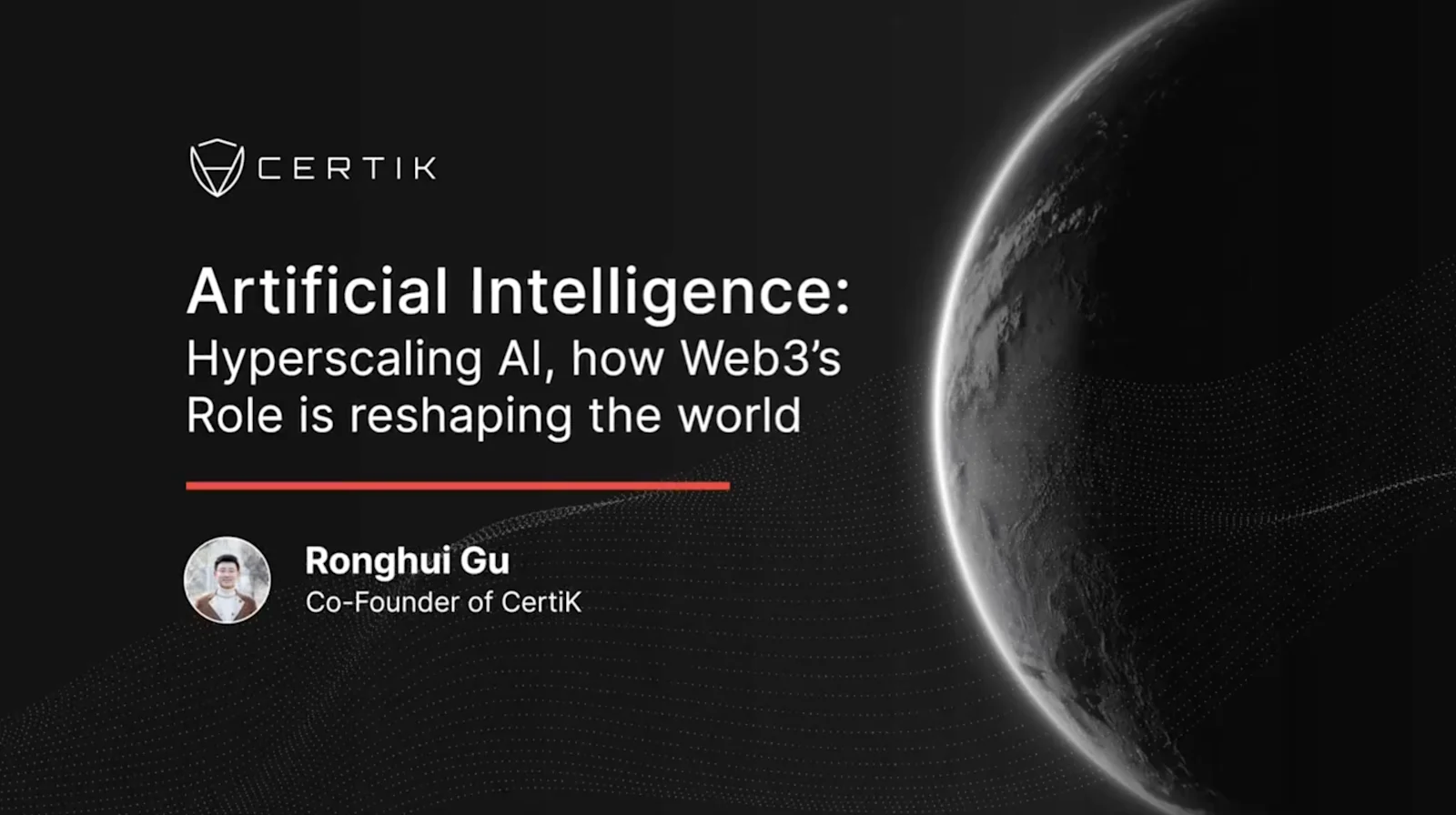
The Blockchain Futurist Conference 2024 in Toronto, Canada served as a focal point for discussing how AI and Web3 interact. Ronghui Gu, CEO of CertiK and Professor of Computer Science at Columbia University, provided key insights during the panel titled, “Artificial Intelligence: Hyperscaling AI, How Web3’s Role is Reshaping the World.” His discussion shed light on the myriad use cases of blockchain and how CertiK is leveraging these technologies to advance its cybersecurity operations and address recent industry challenges.
Below, we’ll explore some of these insights.
Navigating Data Privacy with Decentralization
A central theme of the panel was the issue of data privacy in the context of centralized AI models. As AI systems, such as those developed by leading tech giants like Google and Microsoft, become more sophisticated, they require vast amounts of data for training and fine-tuning. This process can be costly and raises significant concerns about the handling of sensitive user information. Startups and smaller companies, in particular, face the dual challenge of managing limited resources while ensuring data security.
Fortunately, blockchain technology presents a compelling solution to these privacy concerns. By decentralizing data storage and processing, blockchain can provide a more secure and accessible environment for user information. This approach not only mitigates the risks associated with centralized data handling, but also enhances transparency and trust in AI systems.
Proprietary vs. Open Models
The panel also tackled the debate between proprietary and open AI models. Professor Gu emphasized that the choice between the two should be guided by industry needs and the specific requirements of a company.
In highly sensitive fields like healthcare, proprietary models are typically preferable. For instance, IBM Watson Health employs proprietary algorithms to ensure that patient data remains confidential and secure. This system is crucial for maintaining trust and protecting against data breaches in an industry where confidentiality is paramount.
Conversely, open models offer advantages in other areas. Platforms like Hugging Face, GitHub Copilot, and Notion AI provide open-source models for a wide range of developers and researchers, fostering transparent innovation and collaboration.
CertiK’s Innovative Use of AI
At CertiK, AI has become an integral part of our strategy for maintaining security in the blockchain ecosystem. As Professor Gu stated at the Blockchain Futurist Conference, our teams use AI to analyze smart contracts for vulnerabilities and potential security flaws. Our teams can therefore perform thorough audits more quickly and efficiently than ever before.
However, AI is not a substitute for our sophisticated auditing and security processes. While AI excels at detecting patterns and automating routine tasks, complex security scenarios often require human intervention. Our approach combines AI-driven insights with the expertise of cybersecurity professionals to provide comprehensive solutions.
Looking Ahead
The integration of Web3 and AI offers tremendous opportunities for advancing cybersecurity. For CertiK, our ongoing evolution in these fields means continually pushing the boundaries of innovation while staying vigilant against emerging blockchain threats.
In recent times, the cybersecurity landscape has been marked by incidents that highlight the critical need for robust and adaptive security solutions. CertiK’s approach to integrating AI and blockchain aims to address these challenges by enhancing our ability to detect and respond to complex threats.
For a thorough audit of your smart contract code or to consult with our team of experienced auditors and security experts, please get in touch with us at CertiK.com.